
When a tooth becomes severely damaged or weakened—often due to decay, trauma, or root canal treatment—restoring its strength and stability becomes a top priority. This is where post and core dental procedures play a crucial role. Acting as the foundation for a crown, post and core restoration helps rebuild the internal structure of a tooth that has lost a significant portion of its natural support. By reinforcing the tooth from within, this procedure not only restores its function but also enhances aesthetics, allowing you to smile with confidence once again.
In this blog, we’ll explore what post and core treatment involves, when it’s needed, the different materials used, and how it contributes to the long-term health and beauty of your smile.
What Is a Post and Core Dental Procedure?
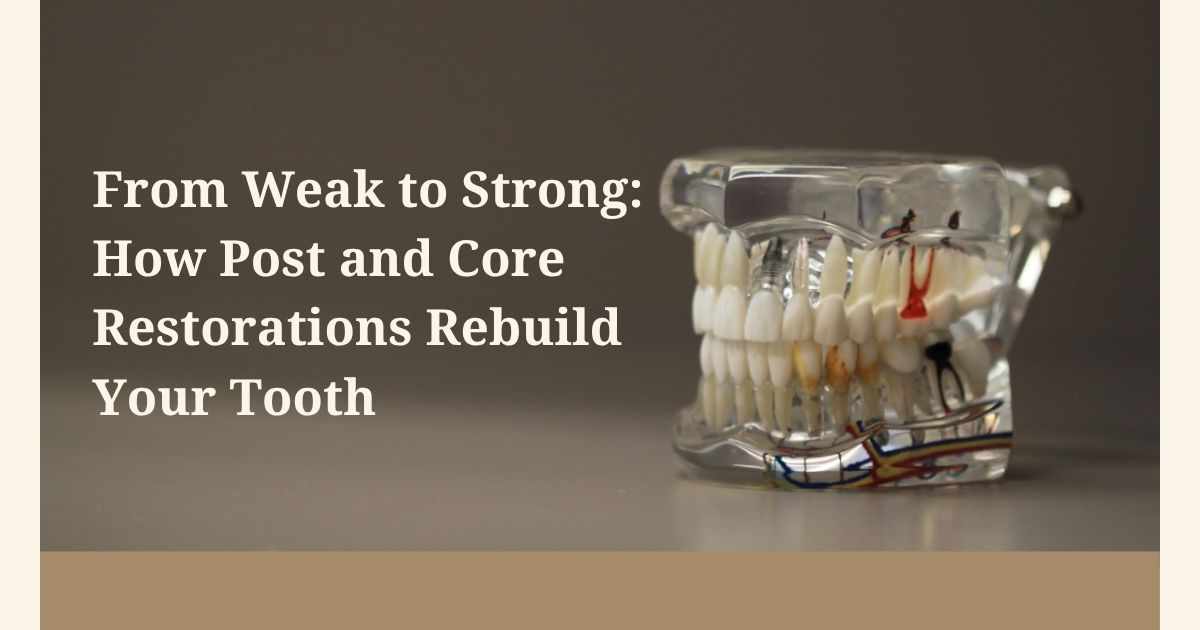
A post and core is a type of restorative dental treatment designed to rebuild and strengthen a tooth that has undergone a root canal or has lost substantial tooth structure. It is typically performed before placing a dental crown.
The Post: The post is a small rod inserted into the root canal of the tooth. It provides anchorage and stability to the core buildup above it.
The Core: The core is a filling material placed over the post to replace the lost portion of the tooth and provide a solid foundation for a dental crown.
Together, the post and core form the essential support system that allows a damaged tooth to function and appear like a natural one again.
When Is a Post and Core Needed?
Not all teeth that undergo a root canal need a post and core. Dentists recommend this treatment in specific situations, such as:
Severely Decayed or Broken Teeth: When a large portion of the natural crown is missing due to decay or fracture.
After Root Canal Treatment: When the tooth structure becomes brittle and needs reinforcement for a crown.
Insufficient Tooth Structure: When the remaining tooth portion is too weak to hold a crown securely.
Restoring Functionality: To help restore chewing ability and maintain proper alignment in the dental arch.
Essentially, a post and core is needed whenever a tooth lacks the strength to support a crown independently.
Step-by-Step Procedure of Post and Core Dental Treatment
Here’s how dentists perform a post and core procedure step by step:
Assessment and Preparation: The dentist evaluates the condition of the tooth and root canal.
Placement of the Post: After cleaning the canal, a small metal or fiber post is carefully inserted into it.
Core Buildup: A strong dental material—such as composite resin or dental amalgam—is used to build the core structure around the post.
Crown Placement: Once the post and core are secured, a dental crown is placed on top to restore the tooth’s full appearance and function.
This entire process ensures that the tooth gains both structural integrity and long-term protection.
Types of Posts Used in Dentistry
There are several materials used for posts, each with unique benefits:
Metal Posts: Made of stainless steel, titanium, or gold. These are highly durable and provide strong support.
Fiber Posts: Made of carbon fiber or glass fiber, these are flexible, esthetically pleasing, and compatible with tooth-colored restorations.
Ceramic Posts: Best for front teeth due to their superior aesthetic properties.
The choice of post depends on the tooth’s location, the amount of remaining structure, and the patient’s cosmetic preferences.
Benefits of Post and Core Dental Restoration
A post and core restoration offers numerous advantages that go beyond aesthetics:
Strength and Stability: It reinforces the weakened tooth structure, preventing future fractures.
Longevity of Crowns: A solid foundation ensures crowns last longer and function effectively.
Improved Aesthetics: The restoration looks natural, blending seamlessly with surrounding teeth.
Restored Function: Patients can chew and speak comfortably without worrying about tooth weakness.
Cost-Effective Solution: It helps preserve the natural root, avoiding the need for expensive implants.
Aftercare Tips for Post and Core Restoration
To ensure the longevity of your restoration, follow these essential care tips:
Maintain Proper Oral Hygiene: Brush twice daily and floss gently around the crown area.
Avoid Hard Foods: Refrain from biting hard objects like ice, pens, or nuts that could damage the crown.
Regular Dental Checkups: Visit your dentist every six months for cleanings and to monitor the condition of the restoration.
Use a Night Guard: If you grind your teeth, a night guard can prevent pressure-related damage.
Following these steps helps ensure your post and core restoration remains strong and functional for many years.
Potential Risks and Complications
While generally safe and effective, some complications can occur if not properly managed:
Post Loosening or Fracture: Can occur due to poor bonding or excessive force.
Root Fracture: Rare, but possible if the post is improperly placed or the tooth is too weak.
Crown Detachment: Can happen if the core is not securely bonded or if decay develops underneath.
These risks can be minimized by choosing an experienced dental professional and maintaining good oral hygiene.
Conclusion
A post and core dental procedure plays a vital role in rebuilding the foundation of a tooth that has lost its structure. By reinforcing the tooth from within, it allows for secure crown placement, restores chewing efficiency, and revives the natural aesthetics of your smile. If you have a tooth that’s been weakened after a root canal or severe decay, consulting an experienced dentist near me can help you determine whether post and core restoration is the right solution to bring back your confident, healthy smile.










Write a comment ...